
Too Hot, Too Cold, Just Right: Our “Talk and Tinker Journey” with Goldilocks and The Three Bears
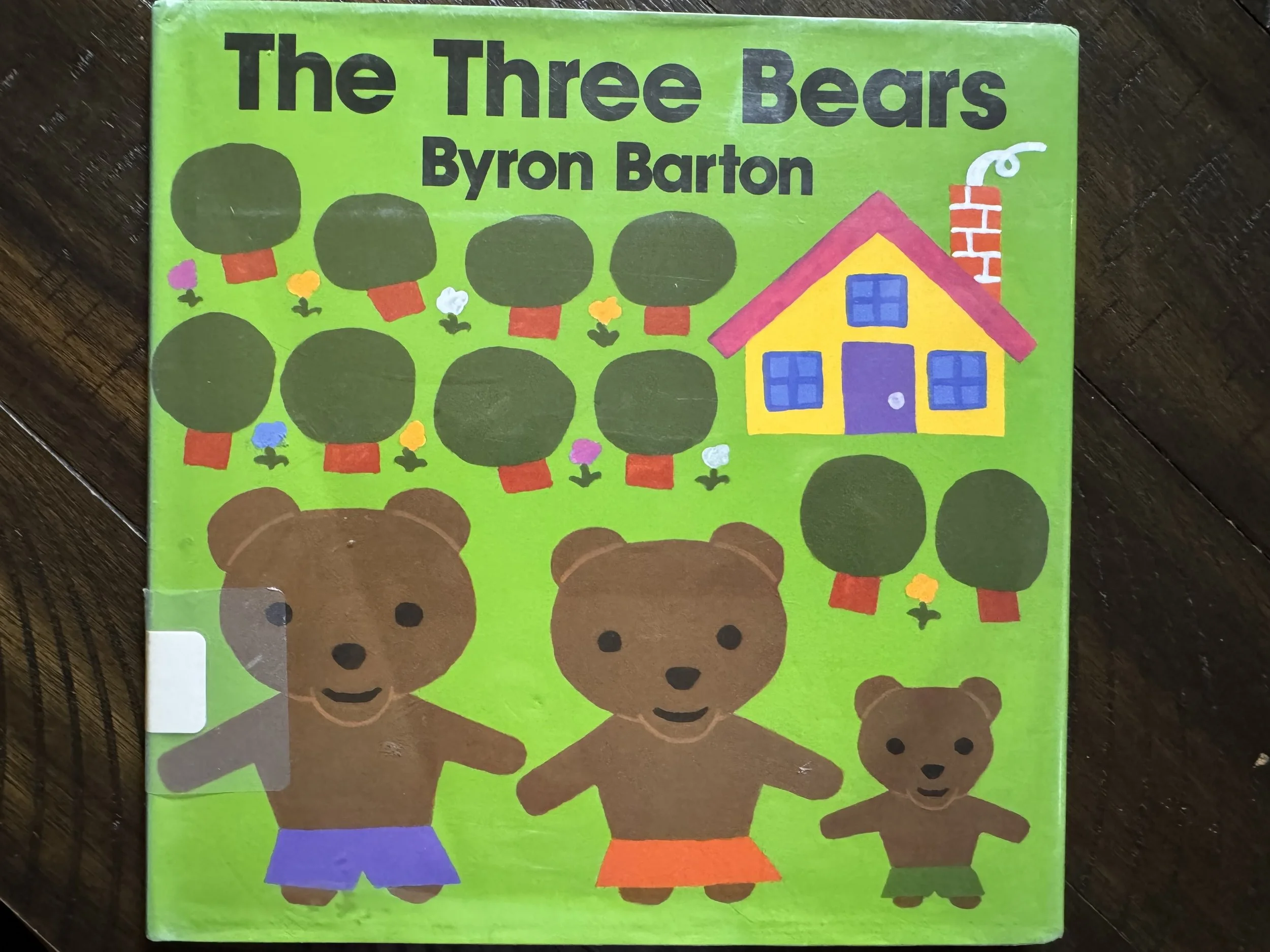
Some stories are just perfect for toddlers - striking pictures, simple language, and a rhythm of threes that little ones can predict and repeat. That's exactly why I chose an adapted, simplified version of Goldilocks and the Three Bears for our latest Talk and Tinker adventure.
A Book Built for Young Learners
Unlike our previous classes, where the book stayed in the background as a reference tool, this story was simple enough - rhyming text and bold, colorful images - that we were able to read it from start to finish. That small shift made a big difference. The children could follow the story easily, and the props, music, and sensory activities really brought the story book to life.
Meet the Bears (and the Bowls)
Reading storybooks is extra fun when teddy bears are involved! We had not one, but three teddy bears in different sizes - Big, Medium, and Small - Papa Bear, Mama Bear, and Baby Bear. We also had three bowls of matching sizes for the bears' porridge bowls. A hot pack and a cold pack let the children actually feel the difference between "too hot" and "too cold" - turning an abstract story concept into something they could touch.
The Song That Tied It All Together
A highlight of the class was a movement song that echoed Goldilocks' experiences throughout the story:
This is big, big, big, this is small, small, small.
This is hot, hot, hot, this is cold, cold, cold.
This is fast, fast, fast, this is slow, slow, slow.
This is hard, hard, hard, this is soft, soft, soft.
Elaborate hand and body movements kept the children physically engaged and gave them a way to act out concepts they were still learning the words for. This song did double duty as both a teaching tool and a management tool - whenever a child wandered off from the group, striking up the song again was often enough to gently draw them back in.
Sensory Play: Porridge, Pudding, and Everything in Between
Sensory exploration took center stage for our classes. In one of the classes, I set up a sensory bin filled with oats, where the children practiced pouring, transferring, and scooping into the different-sized bowls - fine motor practice disguised as play.
In the other class, we mixed small portions of dry oats with water, letting the children experience the shift from dry to wet, sticky textures. Imaginations ran wild here: some children declared they were making cookies, others chocolate pudding, and several "fed" their creations to a very special puppet.
Puppets Bring the Story Home
Speaking of puppets: each child made their own paper bag bear, gluing on pre-cut eyes, ears, nose and mouth, then drawing on fur. These puppets became active characters in the sensory play, with several children feeding their bear puppets the "porridge" they had just mixed - a lovely, spontaneous way of connecting the craft, the sensory activity, and the story all at once.
What worked with Toddlers
At 2-3 years old, this group showed clear signs of growing independence and language, and also the very toddler-specific challenge of sharing. Props, especially the bears and bowls, were very popular, which gave us a great real-world opportunity to model requesting, politely declining, and taking turns.
To keep the whole class engaged, we alternated between sit-down, fine-motor activities (like the puppet craft) and big, whole-body movement (like the song). This pacing matters a lot at this age - energy needs regular outlets, and stillness needs regular breaks.
Two Moments Worth Celebrating
One child in the group had a hard time staying with the larger group activities, often wandering off on his own. But he consistently joined in for the singing, and returned to the book again and again, narrating the story to himself in his own words. It was a beautiful reminder that engagement doesn't always look like sitting still in a circle; sometimes it looks like a child processing a story on their own terms, at their own pace.
Another child, a Dual Language Learner, kept up with every activity and used an impressive number of words throughout the class - a great example of how multisensory, repetitive, and physically engaging activities can support language development for all kinds of learners.
Why This Class Worked
A few things stood out:
Choosing a book matched to the group's age made a full read-aloud possible, giving the whole class a shared narrative thread
A repeating movement song doubled as both an engagement tool and a gentle redirection strategy
Layering sensory play, movement, and fine motor crafts kept energy levels balanced across the whole class
Modeling social skills in real time, like sharing and turn-taking, turned an everyday toddler challenge into a genuine learning moment
Try some (or all) of these activities at home, don't be afraid to spread a rich story across multiple readings. Giving activities room to breathe, and revisiting favorite songs and props, lets children build familiarity and confidence with both the story and the skills it's teaching.